Intermountain Health Internal Personas
Project Overview
Overview
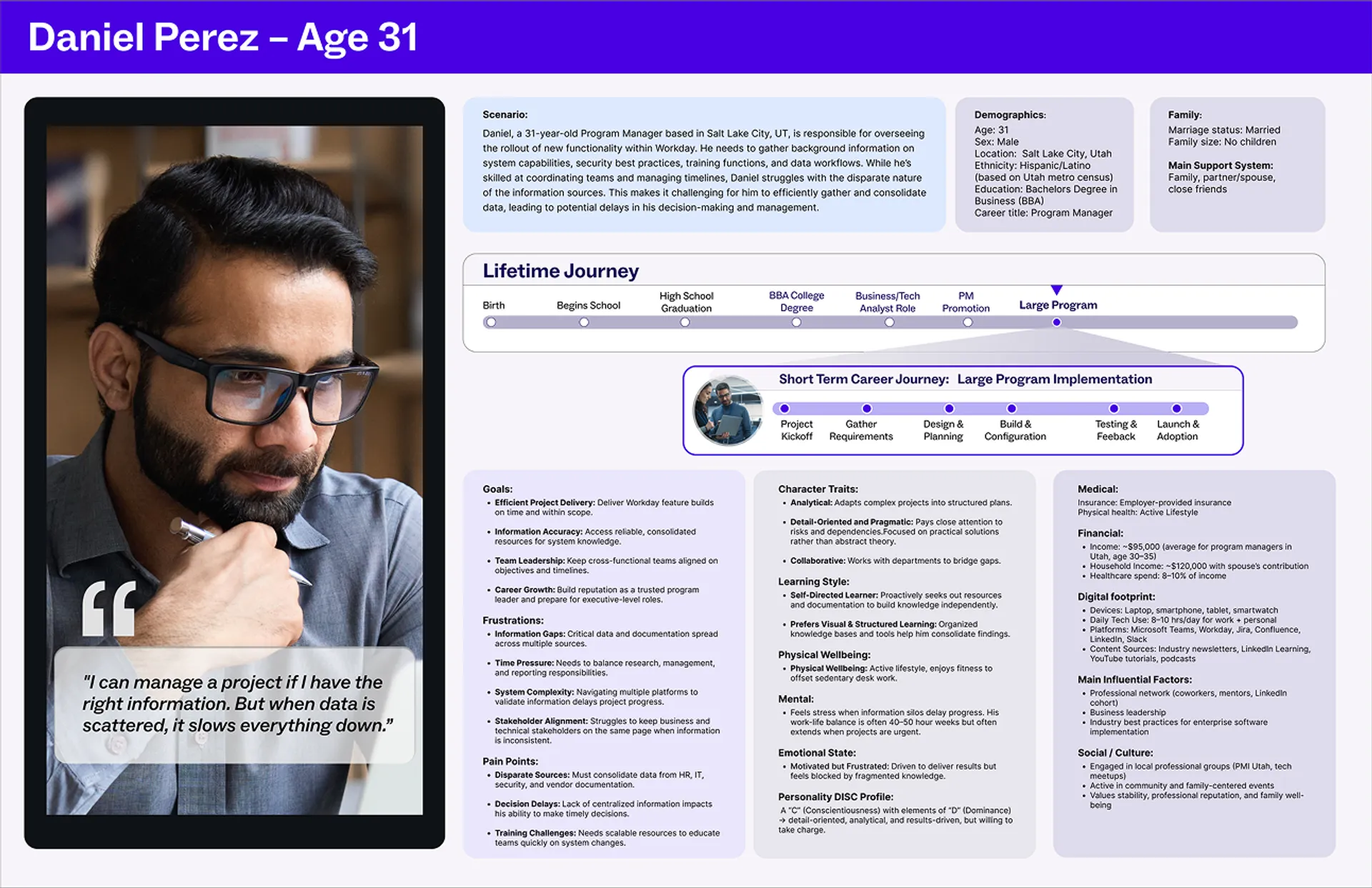
Intermountain Health's Digital Services organization supports employee-facing digital products used by more than 68,000 caregivers across the enterprise. This project focused on creating internal caregiver personas to help teams align on who they are designing for, why caregivers use internal tools, and how differing contexts and constraints impact product strategy and experience design.
Challenge
Employee-facing products often serve a wide and diverse audience, yet are designed without a consistent understanding of caregiver needs across roles. Within Digital Services, teams lacked a unified framework to:
- Compare clinical and non-clinical caregiver needs
- Understand how urgency, environment, and task type impact digital expectations
- Design consistently across multiple internal products and platforms
- Move beyond role titles to behavior-based decision making
Without shared personas, teams risked designing for edge cases, personal assumptions, or the loudest stakeholder rather than the broader caregiver population.
Role
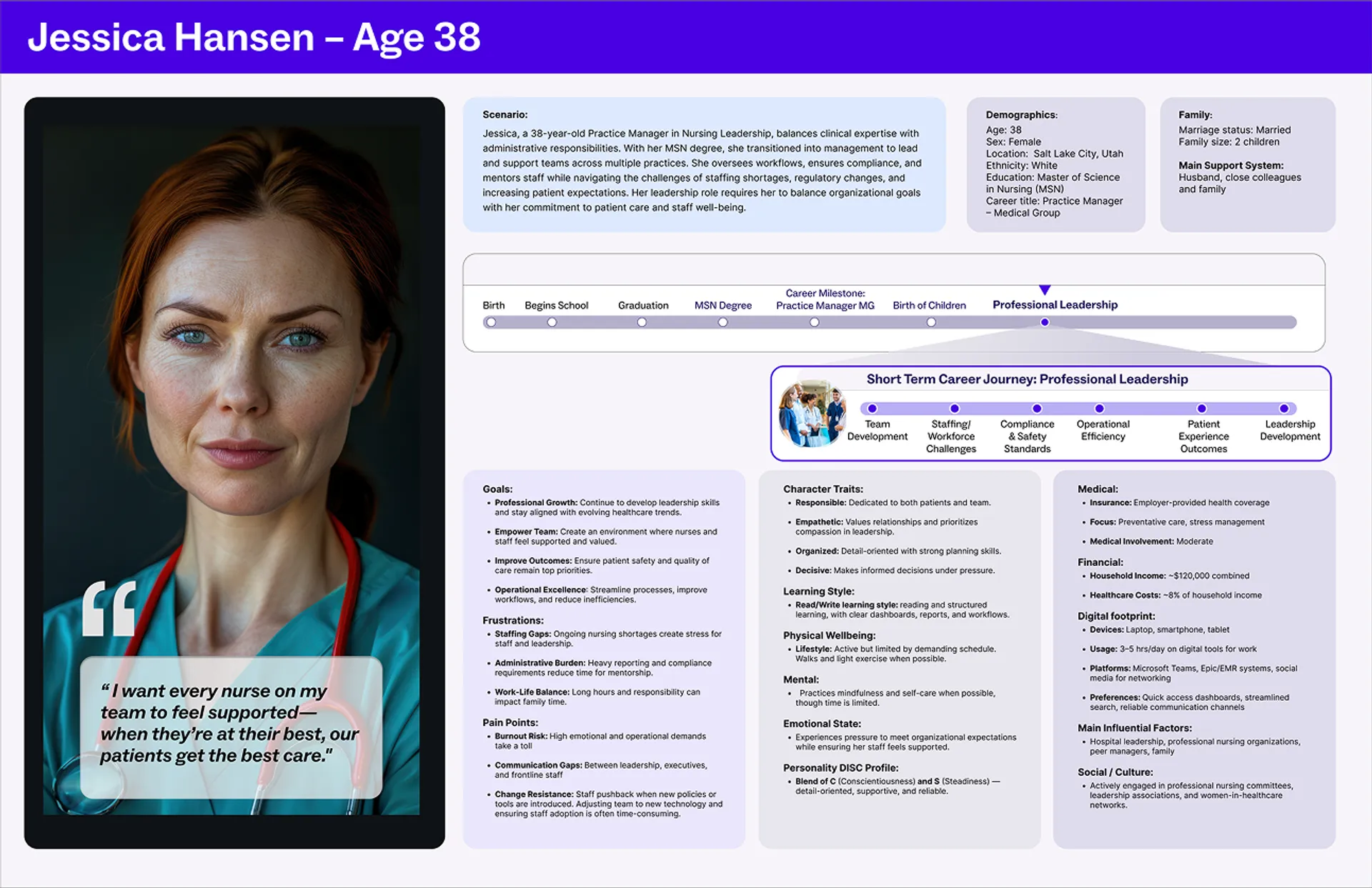
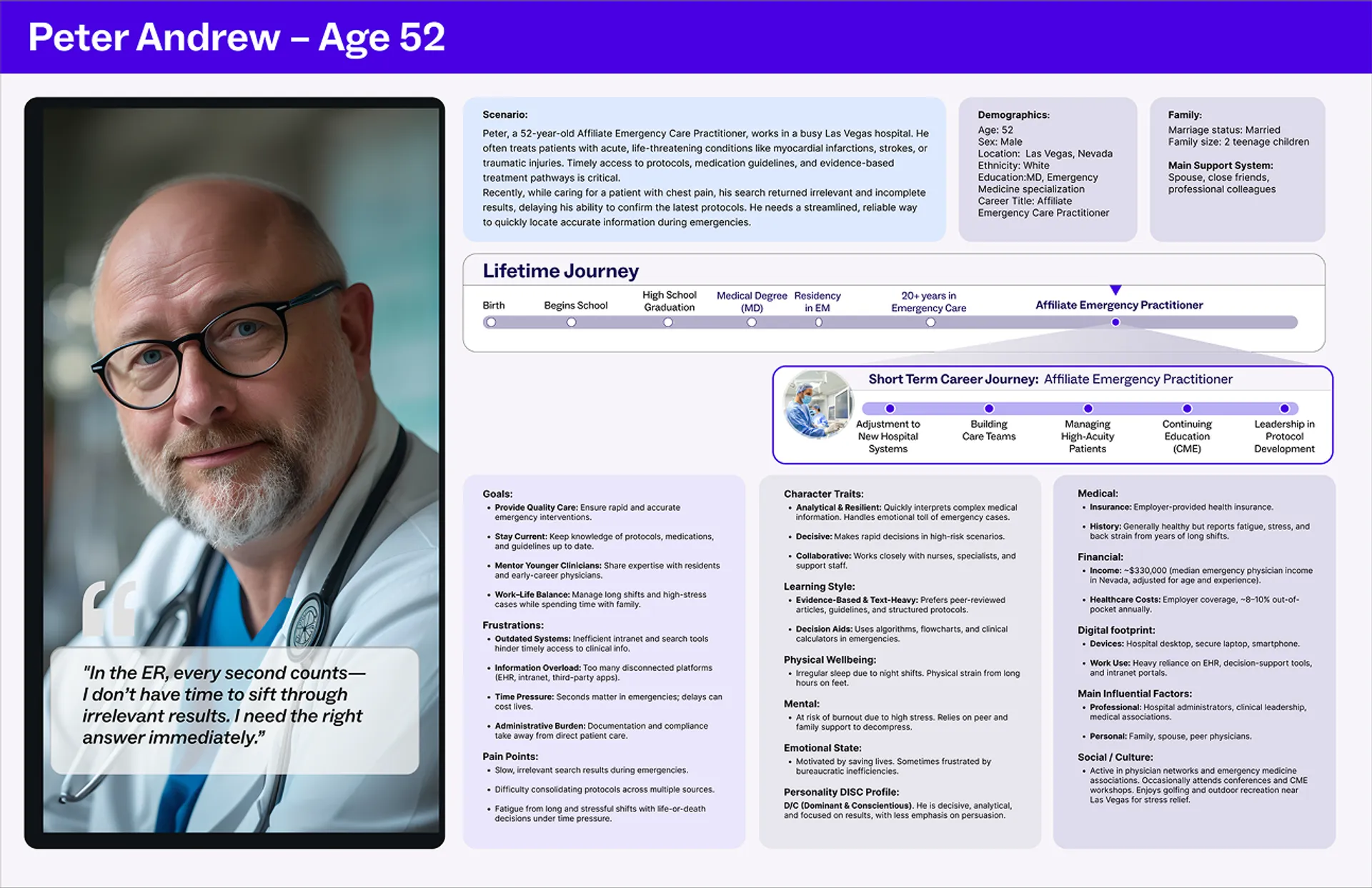
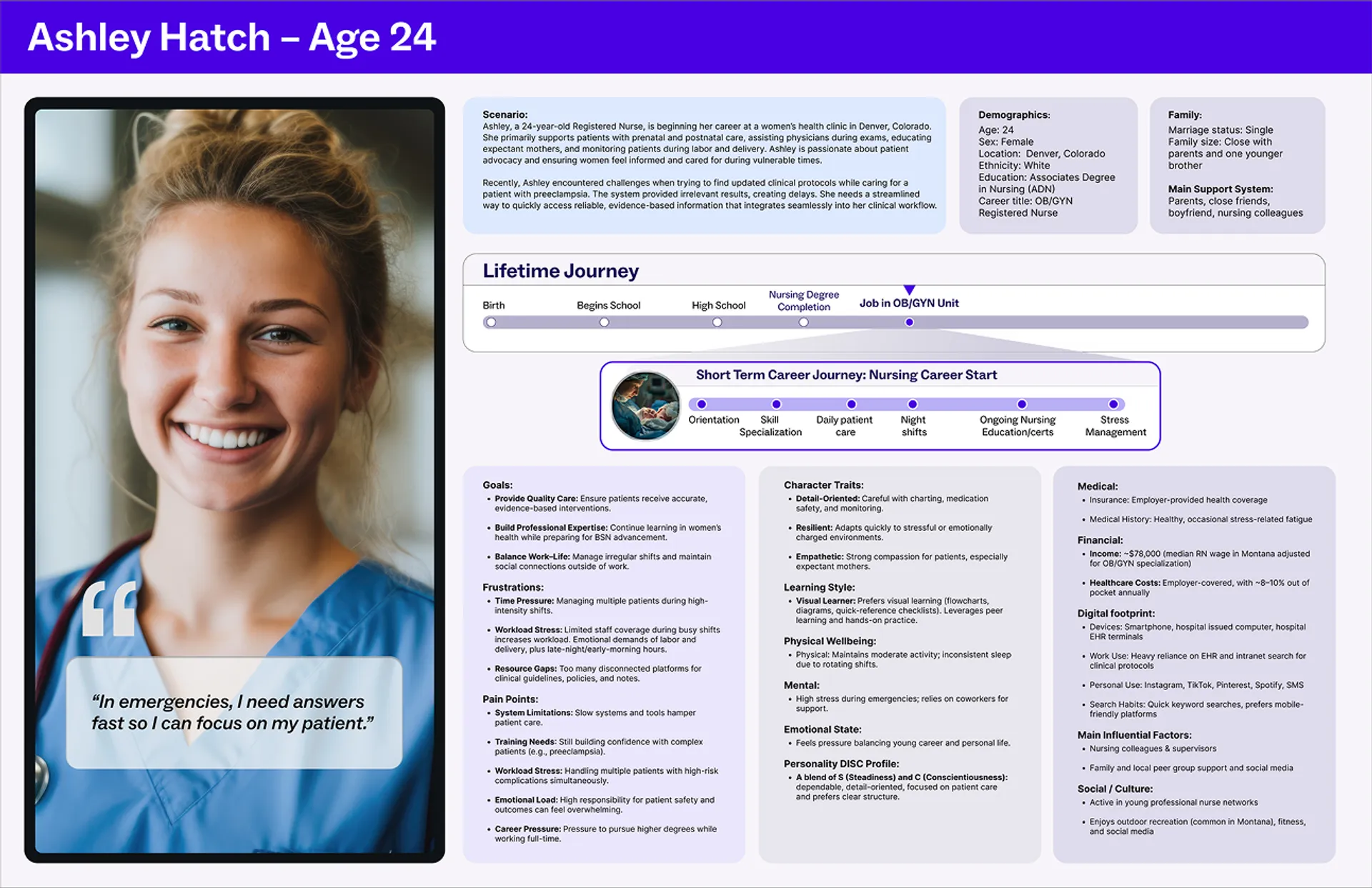
As the Principal Designer, I led the strategy, research synthesis, and creation of Intermountain Health's internal caregiver personas to support employee-facing digital products used by medical and operational staff. I partnered closely with clinical leaders, Digital Services, product, and engineering teams to build a shared understanding of how caregivers across clinical, leadership, and administrative roles access and rely on internal tools in real care settings.
Solution
By grounding employee-facing work in a clear set of internal personas, Digital Services teams are able to:
- Prioritize features and content based on caregiver context
- Reduce fragmentation by designing for shared behavioral needs
- Improve clarity, efficiency, and trust across internal tools
- Support caregivers with experiences that respect time, accuracy, and cognitive load
The personas function as decision-making tools, ensuring employee-facing products consistently support caregivers in delivering care, managing operations, and leading teams—regardless of role or platform.
Impact
With more than 68,000 caregivers relying on internal digital tools, a shared understanding of the employee audience is essential. These internal personas create alignment across Digital Services, enabling more intentional, scalable, and human-centered employee experiences across Intermountain Health.
The Process

Empathize

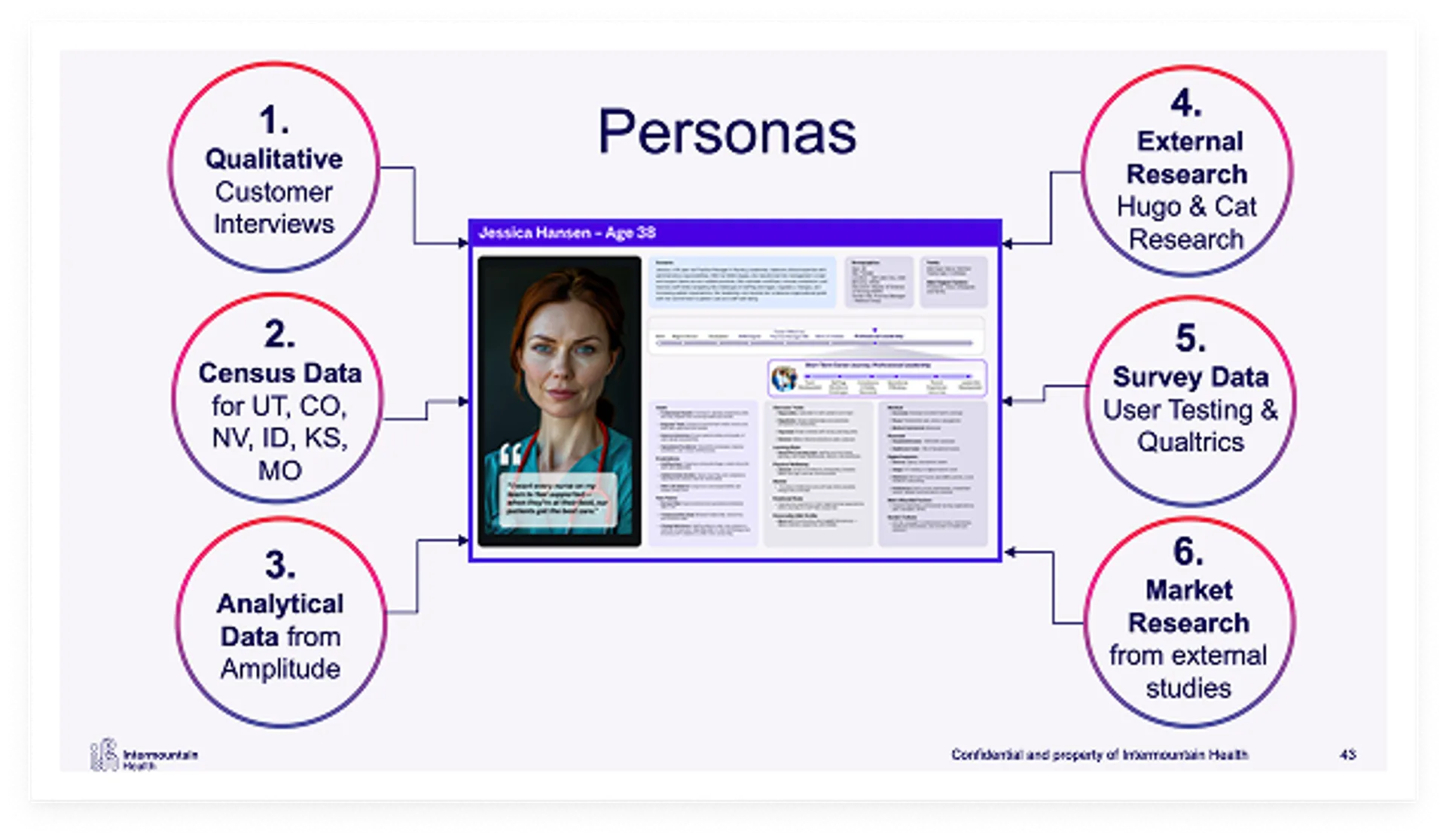
Research focused on how caregivers interact with internal digital tools within the realities of their workday—not just their job titles. Key inputs included:
- Stakeholder interviews across Digital Services, clinical leadership, and operations
- Synthesis of existing internal research and platform usage patterns
- Qualitative insights into environment, time pressure, and cognitive load
- Review of internal workflows across clinical, operational, and administrative domains
This phase emphasized context, constraints, and motivation over organizational structure.
Define

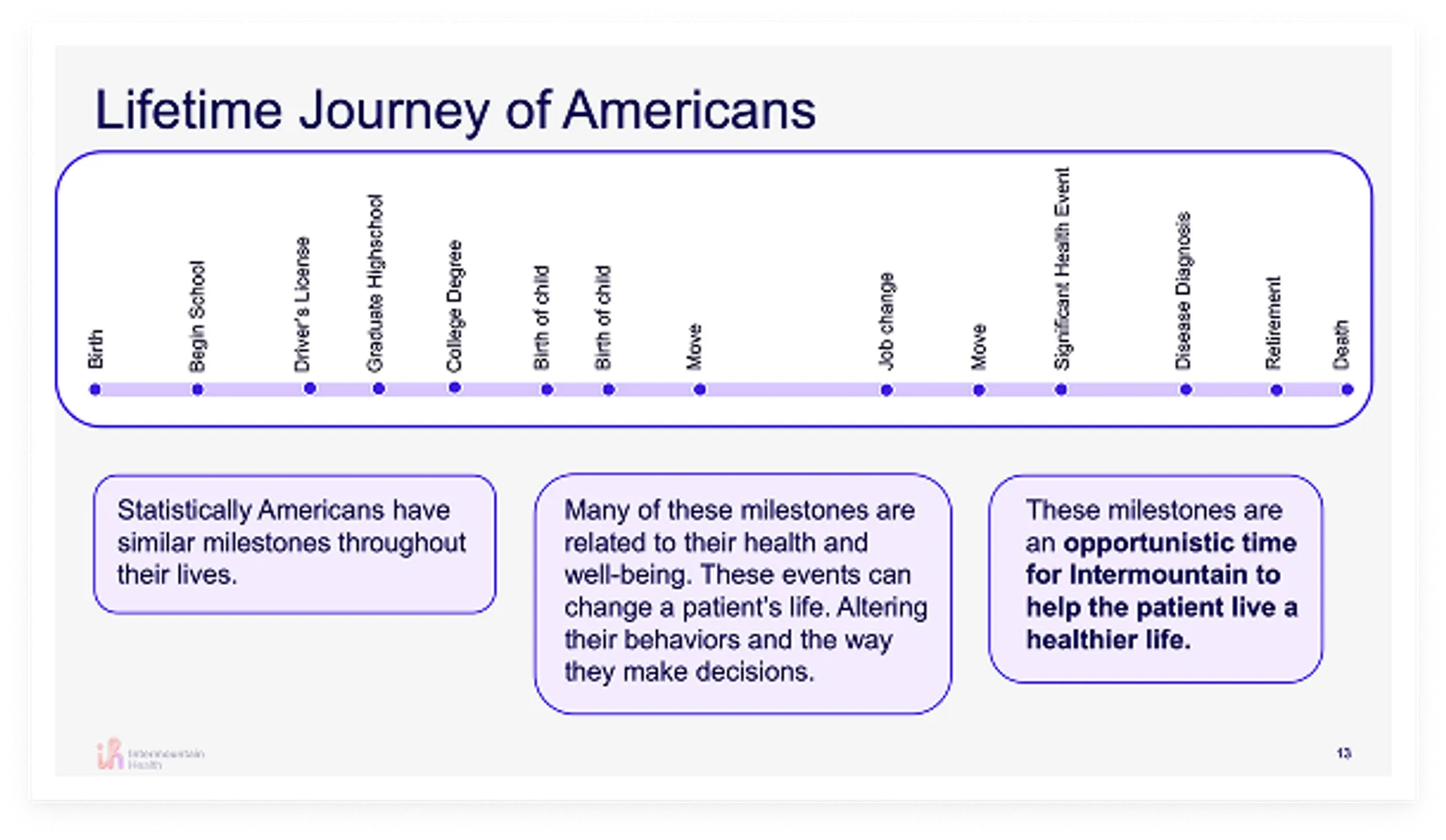
Caregivers were grouped based on how and why they interact with digital tools, not where they sit in the org chart. Segmentation factors included:
- Task urgency vs. planning-oriented work
- Frequency of digital tool usage
- Level of autonomy vs. approval dependency
- Environmental constraints (clinical floor, office, remote)
- Need for speed vs. depth of information
This resulted in a clear set of caregiver archetypes that could scale across multiple internal products.
Ideate

Ideation focused on turning research into a clear, scalable persona model that Digital Services teams could use across employee-facing products. Rather than designing features, this phase centered on defining the right segmentation, structure, and level of detail to reflect real caregiver contexts.
I explored and tested multiple models—role-based vs. behavior-based—ultimately prioritizing time pressure, environment of care, cognitive load, and decision risk over job titles. The final personas emphasize how caregivers actually work, help teams answer critical design questions quickly, and scale across clinical and operational products without losing relevance.

Prototype

Prototyping focused on shaping the personas around the real problems medical employees face when navigating internal systems—fragmented content, inconsistent terminology, and difficulty finding trusted information across multiple applications. I used early persona prototypes to test how well each model surfaced key factors like clinical urgency, environment of care, and the need for fast, accurate answers. By iterating on these prototypes with clinical and Digital Services partners, we refined the personas to highlight where unified content, consistent language, and reliable access mattered most. The final persona artifacts helped teams design solutions that work across applications, support caregivers in different care settings, and reduce friction when switching between systems throughout the organization.
- Provide clear, trusted access to policies and staffing resources across systems.
- Reduce friction between tools so leaders can support teams without extra overhead
- Support both daily operations and long-term workforce decisions
- Deliver immediate, authoritative answers without noise or unnecessary steps
- Prioritize speed, relevance, and trust across clinical tools and search experiences
- Support clinicians working across multiple systems under extreme time pressure
- Provide fast, reliable access to evidence-based protocols and clinical guidance
- Reduce cognitive load for nurses juggling multiple patients and tasks
- Support learning and decision-making without disrupting patient care
- Provide a single, trusted source for program documentation and system knowledge
- Reduce friction between tools so information is easy to find, current, and consistent
- Support planning and execution across long timelines and cross-functional teams
Test

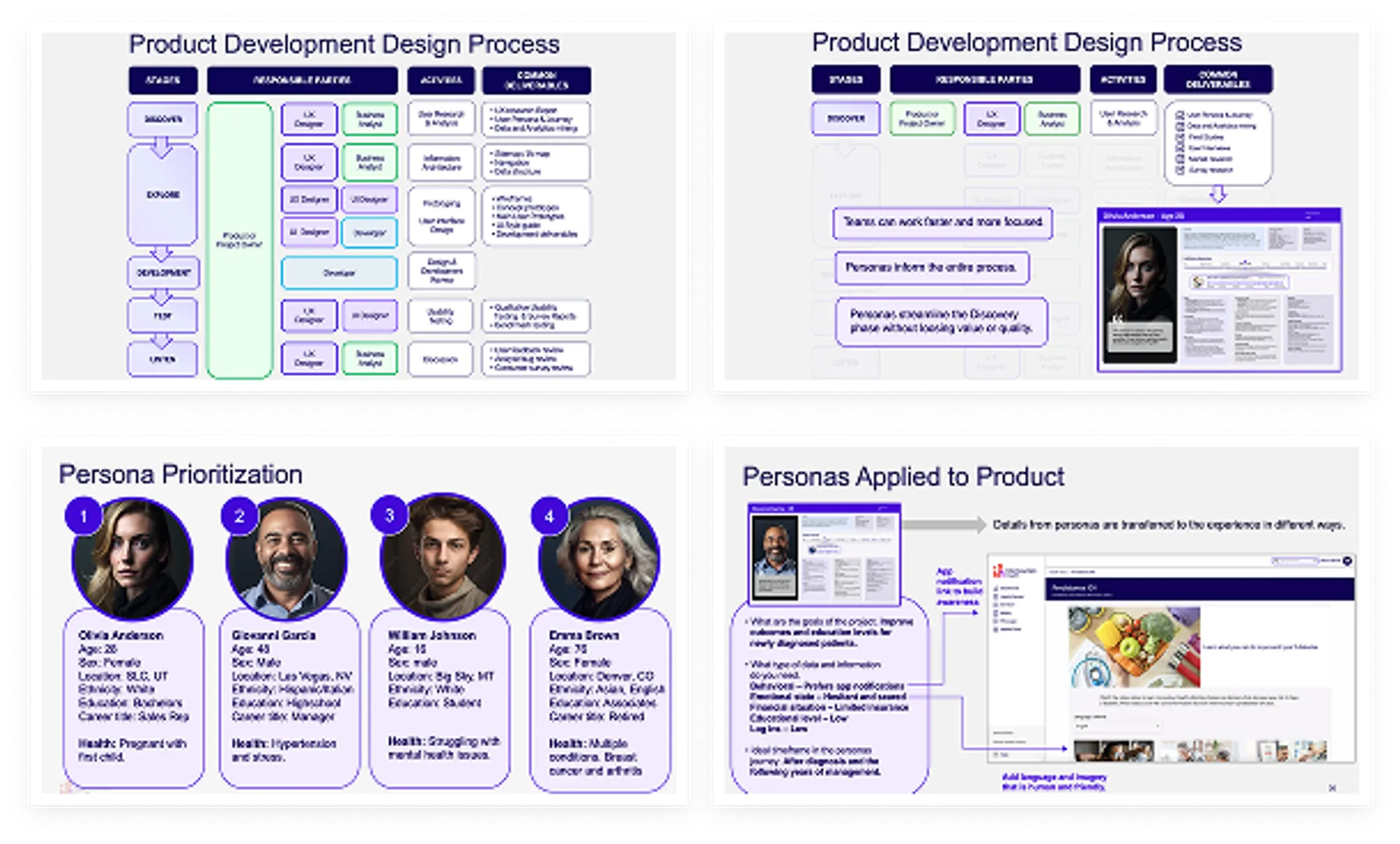
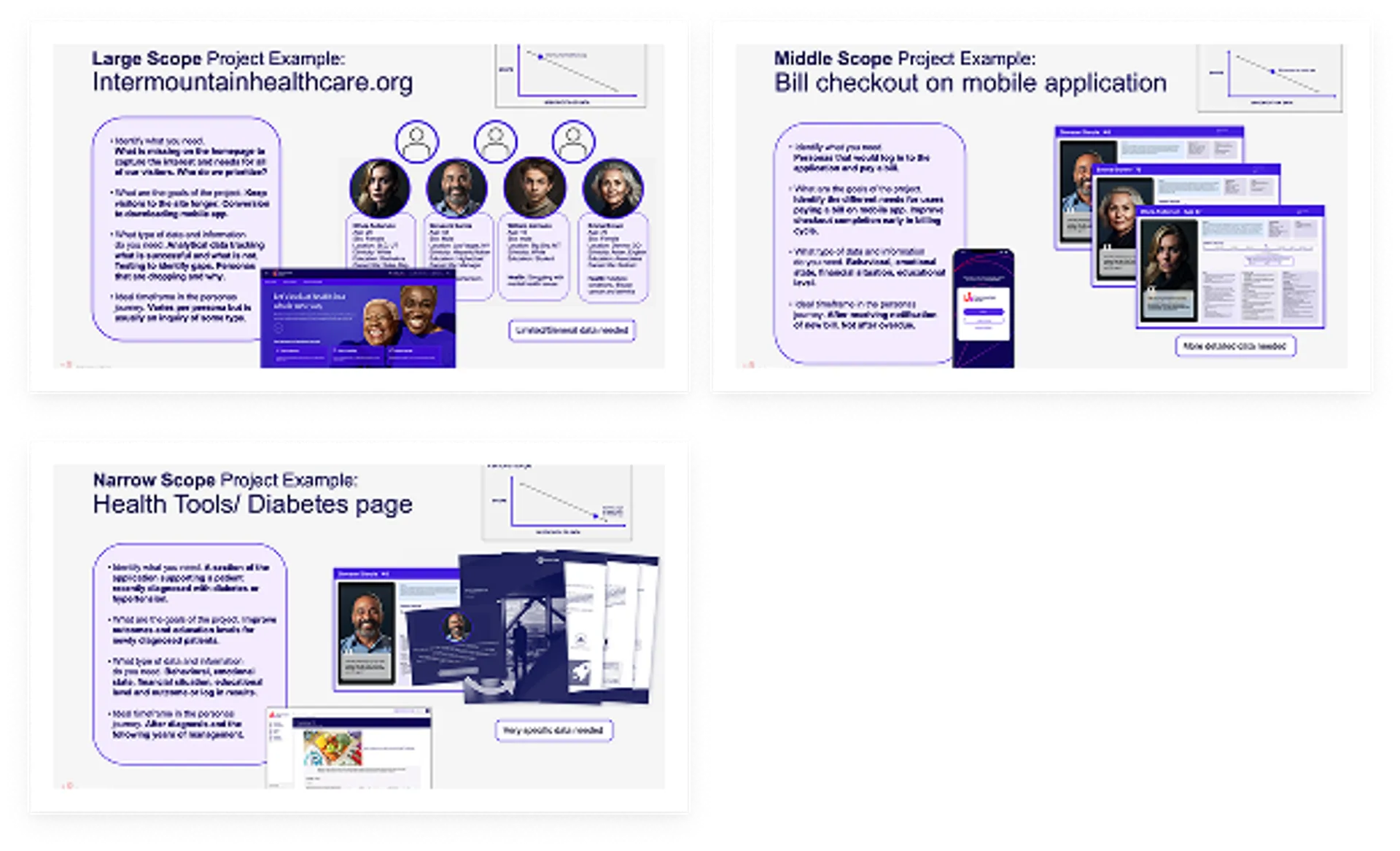
Testing in this phase means applying the personas to different products and project sizes to see how well they highlight user needs and potential issues. Using them in large, middle, and narrow-scope work shows whether each persona brings forward the right insights and helps teams anticipate real-world challenges. This process also became part of training for designers and product owners, helping them learn how to think through user needs and apply personas effectively in their own work.
Implement

The implementation phase focused on helping the team confidently use the personas in real project work. This included a two-session training series that walked through how the personas were created, the research behind them, and the specific ways they can be applied throughout the product development process. The sessions showed designers and product owners where personas fit into discovery, planning, and decision-making, and how they can strengthen problem-framing, prioritization, and solution design. By the end of this phase, the team had a shared understanding of how to integrate personas into everyday workflows, making them a practical tool rather than a reference document.